Weather is one of the biggest reasons people fall in love with Southern Utah. St. George, Hurricane, Washington, Ivins, and Santa Clara get long stretches of sun, mild winters, low humidity, and enough seasonal variety to keep life interesting.
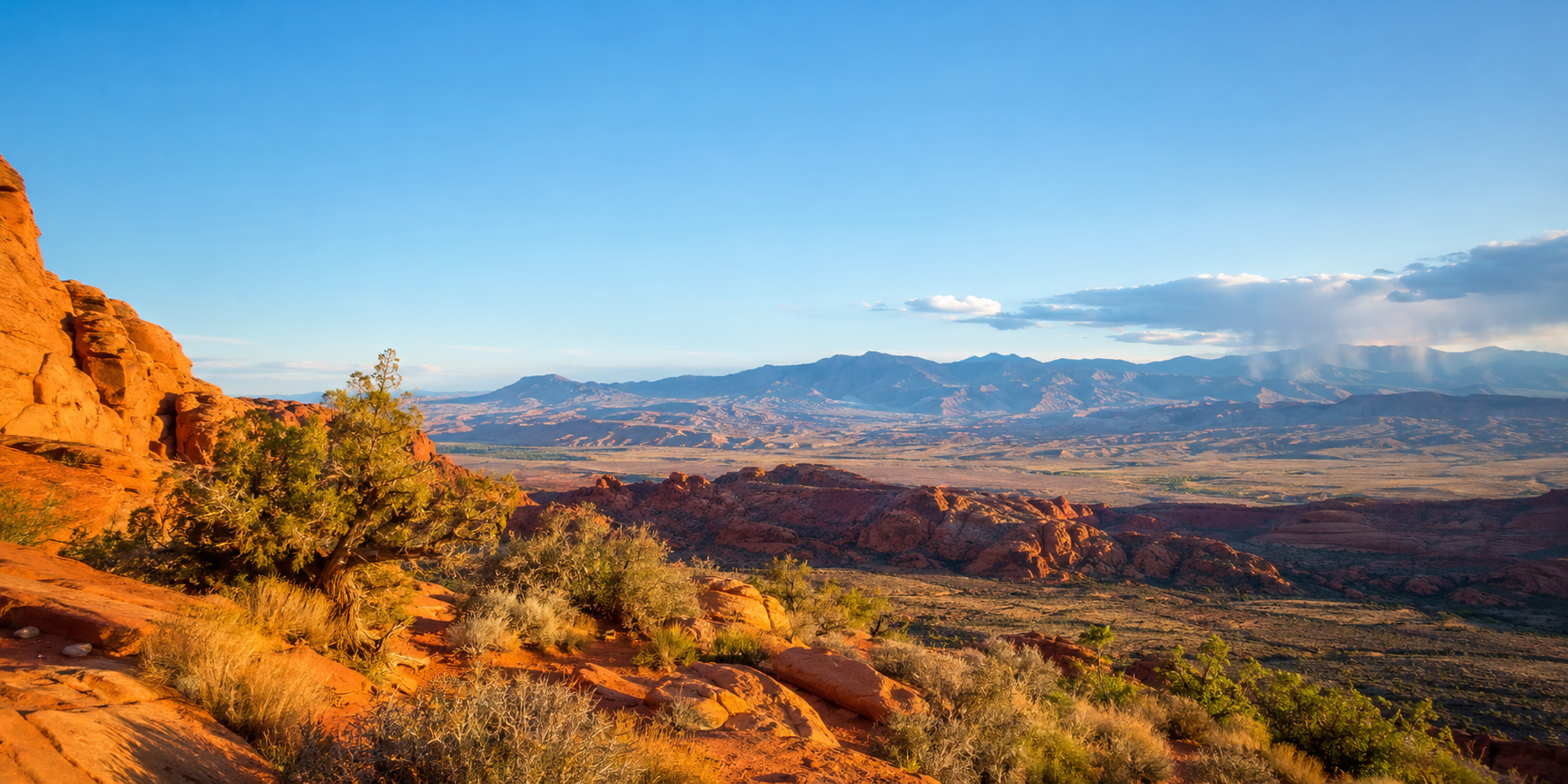 But the weather here is not just "warm and sunny." Summers are legitimately hot. Winter nights can still dip near freezing. Rain usually comes in short bursts, and drought is always part of the larger western water conversation.
Average Weather by Month in St. George
Here is a simple month-by-month look at historic averages for St. George. Hurricane, Washington, Ivins, and Santa Clara are generally similar, with small differences depending on elevation and exposure.
| Month | Avg High | Avg Low | Avg Rain | Local Feel |
|---|---|---|---|---|
| January | 53.3°F | 26.9°F | 1.12" | Cool days, cold mornings, rare quick snow |
| February | 60.5°F | 31.7°F | 0.97" | Early spring feeling by afternoon |
| March | 68.1°F | 37.4°F | 1.00" | Prime hiking and biking weather |
| April | 77.1°F | 44.2°F | 0.47" | Warm days, great evenings |
| May | 86.3°F | 52.5°F | 0.40" | Pool season starts for a lot of people |
| June | 96.0°F | 60.3°F | 0.20" | Hot, dry, big sunshine |
| July | 102.0°F | 67.7°F | 0.55" | Very hot, monsoon storms possible |
| August | 99.6°F | 66.3°F | 0.66" | Still hot, occasional stormy afternoons |
| September | 93.3°F | 56.9°F | 0.56" | Summer fades into perfect evenings |
| October | 80.6°F | 44.9°F | 0.62" | One of the best months of the year |
| November | 64.7°F | 33.1°F | 0.70" | Mild days, jacket mornings |
| December | 54.3°F | 27.3°F | 0.83" | Cool but usually very livable |
Weather averages compiled from published St. George climate summaries. Actual conditions vary by year and neighborhood.
How Much Sunshine Does Southern Utah Get?
Sunshine is the real story here. St. George is commonly described as having more than 300 sunny days per year, and even winter usually includes a lot of clear, bright afternoons.
Statewide sunshine data shows Utah's sunniest stretch is typically late spring through early fall, with the strongest sunshine percentages in June, July, August, and September. Southern Utah generally feels even sunnier than northern Utah because winter inversions are less common and storms usually move through quickly.
Rainfall: Not Much, But It Can Hit Hard
St. George averages roughly 8 to 9 inches of precipitation per year depending on the dataset used. That is not much, especially compared to many parts of the country.
The important local detail is that our rain often arrives in bursts. A quick monsoon storm can drop a lot of water in a short period, which is why washes, drainage, lot grading, and floodplain research are worth paying attention to when buying a home.
The Best Weather Months
If you ask most locals, the best months are usually March, April, October, and November. Those are the months when you can comfortably hike, bike, golf, tour homes, work in the yard, and enjoy dinner outside without planning your whole day around the heat.
May and September are also excellent, but they can lean hot. June through August are the months when you either embrace early mornings, water, shade, and air conditioning, or you learn fast.
What About Drought?
Drought is part of life in the desert Southwest. It should be taken seriously, but it should also be understood accurately.
Utah entered 2026 with serious drought concerns after a very dry, warm winter. State officials issued drought updates and a drought emergency, and news outlets reported that much of Utah was dealing with significant drought conditions.
That does not mean Southern Utah is about to "run out of water." It means water has to be managed carefully, especially as Washington County grows.
How Much Water Is There Really?
Washington County's water supply is built on surface water and groundwater from the Virgin River watershed. The Washington County Water Conservancy District reports that local suppliers deliver roughly 50,000 acre-feet of potable water each year, with the district's existing facilities producing an average annual yield of about 30,000 acre-feet.
The long-term challenge is not that there is suddenly no water. The challenge is matching growth, drought cycles, outdoor water use, storage, reuse, and conservation in a desert county that people keep moving to.
What Local Water Planning Looks Like
Recent reporting from KUER and KUNC explained that Washington County's current 20-year water strategy leans heavily on conservation and water reuse. Wastewater reuse is expected to become a major part of the plan, especially for outdoor irrigation uses that can free up treated culinary water for homes and businesses.
The county has also been one of Utah's leaders in turf removal. Replacing unnecessary grass with water-wise landscaping saves real water without asking people to give up attractive yards.
That is the better way to talk about water here. Not panic. Not denial. Practical conservation, smarter landscaping, reuse, storage, and planning.
What Buyers Should Know
For most buyers, the weather and water conversation comes down to practical questions:
- Does the home have efficient landscaping?
- Is there shade on the west-facing side of the home?
- Are the windows, HVAC, and insulation ready for summer?
- Is the lot graded properly for heavy storm runoff?
- Is the home in or near a floodplain or wash?
- Does the HOA allow desert landscaping or turf conversion?
Bottom Line
Southern Utah's climate is one of the main reasons people want to live here. The winters are mild, the shoulder seasons are incredible, and the sunshine creates a lifestyle that is hard to beat.
Yes, summers are hot. Yes, drought is real. And yes, water planning is an important part of Washington County's future. But the idea that the area is simply going to "run out" misses the bigger picture. Southern Utah is growing because people love the lifestyle here, and the region is actively working on the water systems needed to support that growth responsibly.
You can browse current Southern Utah homes using our Advanced Search, explore St. George homes for sale, or Hurricane homes for sale. For local help comparing neighborhoods, contact Lance Clifford.
Source Notes
Common Questions
What are the best weather months in St. George?
Most locals point to March, April, October, and November. Those are the months you can comfortably hike, bike, golf, and eat dinner outside without planning your day around the heat.
How hot do St. George summers get?
Summers are legitimately hot. June through August you either embrace early mornings, water, shade, and air conditioning, or you learn fast.
Should drought worry me about buying here?
Drought is part of life in the desert Southwest and should be taken seriously, but understood accurately. Utah entered 2026 with real concerns after a dry, warm winter, so it is worth researching.